
Mail routes in the Atlantic, Pacific and Indian Oceans
plus the Routes between the Oceans
Geoff Lewis RDP, FRPSL
This shows the development of worldwide shipping routes by many nations, from the early 1700s to the mid-1870s.
The first frame introduces five themes that are relevant to many covers throughout the exhibit.
- Distant colonies required European countries to provide shipping services.
- Frequent wars until 1815 impacted delivery of ocean mail in many ways.
- Peace after 1815 meant that ships could now be designed for speed.
- Steamships could travel across oceans, only after technological developments enabled ships to travel long distances on a single load of coal.
- Postage on mail to foreign countries. Required the use of forwarding agents, until the big countries co-operated with various postal conventions.
The remainder of the exhibit is divided into sections, each treating a different geographical zone of the world. Most sections start with covers carried by sailing ships arranged by nationality of ship, followed by steamship covers.
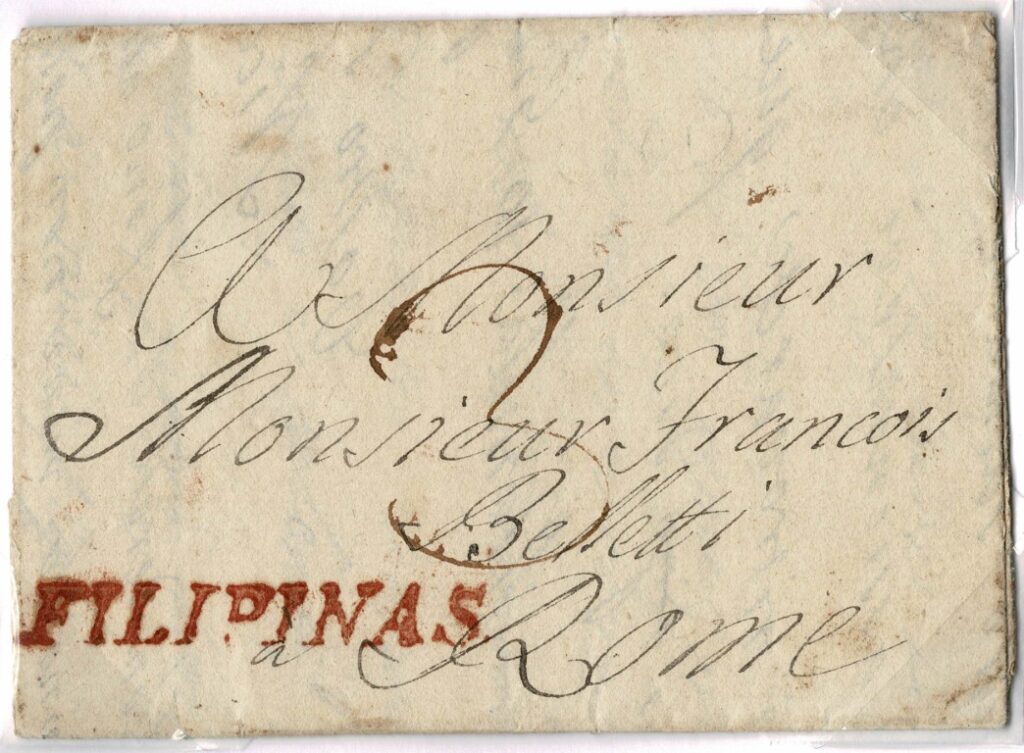
Sailing eastwards across the Pacific on the Manila-Acapulco Galleon
For 250 years from 1565, there was typically one voyage per year. The Galleons were large but slow, and carried goods made in China, such as silks and porcelain. The route depended on prevailing winds and currents, and they usually departed Manila in June to August. They sailed north-east to the latitude of Japan, then due east. Upon nearing the American coast, they sailed south to Acapulco. Typical voyage time was six months.
This cover was written in Manila on 10 June 1786, and was struck with the second oldest recorded example of FILIPINAS. After reaching Acapulco on the Galleon San Pedro, it was carried across Mexico to the port of Veracruz. Spanish ships took it to Havana and then Spain, and it then went overland to Rome.